



Data Engineering on Microsoft Azure

Naveen - Trainer
Data Engineering on Microsoft Azure is a comprehensive course designed to equip you with the skills and knowledge necessary to design, implement, and manage scalable data solutions on the Microsoft Azure platform.
UPCOMING BATCHES
- NEXT BATCH STARTS Nov 04th 2023
Connect With Us
Program Highlight

5000+
Alumni Students

Expertly Designed
Curriculum

40+ Hrs Training

Practical experience through real-life projects

About the Program
Data Engineering on Microsoft Azure is a comprehensive course designed to equip you with the skills and knowledge necessary to design, implement, and manage scalable data solutions using key Azure services.
This course focuses on Azure Databricks, Azure Data Factory, and Azure Synapse Analytics, providing an in-depth understanding of how these powerful tools can be used to handle complex data workflows efficiently.
At NPN Training we believe in the philosophy “Learn by doing” hence we provide complete Hands-on training with a real time project development.
Comprehensive Curriculum
Tried & tested curriculum to make you a solid Data Engineer
- Azure Databricks
- Azure Data Factory
- Azure Synapse Analytics
Course description: This course will help you to learn one of the most powerful, In memory cluster computing framework.
Data Engineering Concepts and Hadoop 2.x (YARN)
1 Quiz
Learning Objectives – This module introduces you to the core concepts, processes, and tools you need to know in order to get a foundational knowledge of data engineering. You will gain an understanding of the modern data ecosystem and the role Data Engineers, Data Scientists, and Data Analysts play in this ecosystem.
Topics –
- Introduction to Big Data (Classification and Characteristics)
- Drawbacks of RDBMS
- Challenges of Big Data
- Sources of Big Data
- Distributed Systems
- What is Data Engineering, Roles and Responsibilities
- Data Pipelines and types
- Hadoop 2.x and Core Components
- Hadoop Daemons
- Hadoop Architecture
- HDFS File Blocks and Architecture
- Introduction to YARN and Architecture
- YARN Application Execution Flow
Hadoop Commands and Configurations
1 Quiz 1 Assignment
Learning Objectives – In this module, you will learn different commands to work with HDFS File System, YARN Commands and how to execute and monitor jobs.
Topics –
- Exploring Important Configuration Files
- Exploring HDFS File System Commands
- Exploring Hadoop Admin Commands
- Exploring YARN Commands
- Executing YARN Jobs
- Monitoring YARN Jobs
- Monitoring different -appTypes
- Killing YARN Jobs
- Exploring Name Node and Resource Manager UI
Structured Data Analysis using Hive
1 Quiz 1 Assignment
Learning Objectives – In this module, you will understand Hive concepts, Hive Data types, loading and querying data in Hive, running hive scripts and Hive UDF.
Topics –
- Introduction to Hive and Architecture
- Exploring Hive table types
- Data loading techniques in Hive
- Hive Complex Data types (Array, Map,
- tructType)
Getting Started with Apache Spark + RDD’s
1 Quiz 2 Assignments
Learning Objectives – In this module, you will learn about spark architecture in comparison with Hadoop Ecosystem and you will learn one of the fundamental building blocks of Spark – RDDs and related manipulations for implementing business logic (Transformations, Actions and Functions performed on RDD).
Topics –
- Overview of Apache Spark
- Data sharing in MapReduce vs Spark
- Exploring Spark Ecosystem
- Exploring RDD’s : Basic Building Block
- Partitions
- Starting Spark Shell
- RDD Creations
- Loading a file
- Parallelize Collections
- Exploring RDD Operations
- Transformations
- Actions
- RDD Actions
- count()
- first()
- take(int)
- saveAsTextFile(path:String)
- reduce(func)
- collect(func)
- RDD Transformations
- map(func)
- foreach(func)
- filter(func)
- Chaining Transformation and Actions in Spark
- Configuring Development environment
- Initializing SparkSession i.e Spark 2.x entry point
- Pair RDD
- Sorting Grouping and Aggregations
Exploring Spark SQL and DataFrame API
1 Quiz 1 Assignment
Learning Objectives – In this module, you will learn about Spark SQL which is used to process structured data with SQL queries. You will learn about DataFrames and Datasets in Spark SQL and perform SQL operations on DataFrames.
Topics –
- Introduction to Spark SQL
- Overview of DataFrames
- Creating DataFrames (In-Memory + External Source)
- Exploring DataFrameReader API
- Attaching Custom Schema
- Working with Columns
- Filtering
- Adding, Renaming, Dropping column
- Grouping, Sorting and Aggregations
- Registering DataFrame as a Table
- Join Operations
- Understanding DataFrameWriter API
Deep Dive Dive DataFrame API
1 Quiz 1 Assignment
Learning Objectives – In this module, you will learn some of the advance concepts of DataFrame API
Topics –
- Complex Data Types
- Handling Corrupt and Missing Records
- Working with Dates
- User Defined Functions (UDF)
- Connect to DB via DataFrame
- Window Functions
Packaging, Deploying and Debugging
1 Quiz
Learning Objectives –In this module, you will learn what are the different aspects to take care to deploy and improve Spark applications.
Topics –
- Packaging Spark Application
- Submitting Spark Application using spark-submit command
- Deployment Modes
- Configuring Spark on YARN
- Monitoring Spark applications on YARN
Best Practices and Performance Tuning
1 Quiz
Learning Objectives –In this module, you will learn what are the different aspects to take care to deploy and improve Spark applications.
Topics –
- Caching and Persistence
- Broadcast Variables
- Optimizing Spark Joins
- Memory Partitioning
Course description: Apache Kafka is a popular tool used in many big data analytics projects to get data from other systems into big data system. Through this course students can develop Apache Kafka applications that send and receive data from Kafka clusters. By the end of this course, you will be able to set up a personal Kafka development environment, master the concepts of topics, partitions and consumer groups, develop a Kafka producer to send messages and develop a Kafka consumer to receive messages. You will also practice the Kafka command line interfaces for producing and consuming messages.
Module 01 – Getting Started with Kafka and Core API’s
1 Quiz 1 Assignment
Learning Objectives – In this module, you will understand Kafka and Kafka Architecture.
Topics –
- Integration between components
- What is Kafka
- Components of Messaging System
- Understanding Kafka components in detail
- Producer
- Consumer
- Broker
- Cluster
- Topic
- Partitions
- Offset
- Consumer groups
- Message Retention in kafka
- Kafka Commit Log
- Kafka
- Starting Zookeeper
- Starting Kafka Server
- Topic operations: create, list, delete, describe
- Publishing data to a topic using console producer
- Publishing data to a topic using console consumer
- Sending and receiving messages
- Hands on – Kafka Cluster with Multiple Brokers
- Creating separate configuration files for brokers
- Launching multiple brokers
- Getting cluster information and broker details from Zookeeper
- Hands on – Topic with multiple partitions
- Creating topic with multiple partitions
- How messages are spread across partitions
- Reading messages from specific partitions
- Reading messages from specific offset in specific partition
- Understanding Kafka Core API’s
- Implementing Kafka Producer & Consumer
Deep Dive Kafka Producer and Consumer API
1 Quiz 1 Assignment
Learning Objectives – In this module, you will understand you will learn advance Kafka Core API i.e Producer API, Consumer API, Kafka Connect
Topics –
- Understanding Producer Partitioning Mechanism using Java
- Different ways to implement partitioning mechanism
- Providing partition number
- Using Round Robin
- Key Hashing
- Messaging Sending
- Producer API
- Synchronous Send
- ASynchronous Send
Streaming Data with Spark Structured Streaming
1 Quiz 1 Assignment
Learning Objectives – In this module, you will understand you will learn advance Kafka Core API i.e Producer API, Consumer API, Kafka Connect
Topics –
- Introduction to Stream Processing
- Batch Processing vs Stream Processing
- Streaming Processing API in Spark
- Overview of Structured Streaming
- Notions of Stream Processing
- Streaming Sources, Sinks and Output Modes
- Streaming data from socket, file as input source
- Output Modes (Append, Complete, Update)
- Aggregating on Streaming Data
- Running SQL Queries on Streaming Data
- Processing JSON data using Stream processing
- Joining Batch and Streaming Data
- Triggers
Advance Stream Processing
1 Quiz 1 Assignment
Learning Objectives – In this module, you will learn advance Stream Processing concepts
Topics –
- Streaming from Kafka as Source and Sink
- Stateless vs Stateful transformations
- Event time and Windowing
- Tumbling Window Aggregate
- Sliding Window
- Watermarks and Late Data
Course description: This course will help you to learn one of the most powerful, In memory cluster computing framework.
Getting Started with AWS, IAM and S3 Storage
1 Quiz
Learning Objectives – In this module, you will learn the fundamentals of AWS, IAM and S3 Storage.
Topics –
- Introduction to Cloud Computing
- AWS Services, Regions and Zones
- Identity and Access Management (IAM)
- Create AWS IAM User and Download Credentials
- Install and Configure AWS CLI
- Introduction to S3 Storage
- S3 Objects, Buckets, and Key Value pairs
- Create Bucket, Upload Object and Exploring UI
- Tagging Bucket and Object
- Optimizing S3 Costs
- S3 Storage classes
- Lifecycle Management
- Retrieve Objects from Glacier
- Protecting Data
- S3 Object Lock
- S3 Versioning and Encryption
- Setup Cross Origin Replication
- AWS Budget Setup – Billing Preferences, Budgets and Alarms
- AWS S3 CLI Commands
- Event Notification, Logging and Analytics
- Billing Preferences, Budgets and Alarms
Big Data Processing with EC2 and EMR
1 Quiz 1 Assignments
Learning Objectives – In this module, you will understand Amazon EMR Instance and how to launch spark cluster.
Topics –
- EC2 Fundamentals
- EC2 Security Groups
- EC2 Key Pair for SSH Connection
- Introduction to EMR
- EMR Architecture
- EMR Types
- EMR Cluster LIfecycle
- Optimizing Instance Types
- Hands-on : Creating EMR Cluster and Connecting via SSH
- Hands-on : Building Packaging and Deploying Spark App
- Stream Processing with EMR
- Setup Glue Catalog Integration with Hive
- Hands-on Query DynamoDB from EMR using Hive
Streaming and Funneling Data with AWS Amazon Kinesis
1 Quiz 1 Assignment
Learning Objectives – In this course you learn to harness the power of Real-time streaming using Kinesis family of services Kinesis Data Streams (KDS), Kinesis Data Firehose (KDF) and Kinesis Data Analytics (KDA) to construct high-throughput, low latency, pipelines of data across a variety of architectural components leading to scalable and loosely coupled systems.
Topics –
- Introduction to Amazon Kinesis
- Kinesis Core Services (Streams, Firehose and Analytics)
- Kinesis Data Streams Components(Producers, Shards, Consumers)
- Creating Kinesis Data Stream using AWS CLI and AWS Console
- Publish Records to Kinesis Data Stream
- Consume Records from Kinesis Data Stream
- Introduction to Kinesis Firehose
- Writing Stream Data to S3
- Connecting Kinesis Firehose with Kinesis DataStream
- Sending Data through AWS CLI
- Introduction to Kinesis Data Analytics
- Running SQL queries to Process Streaming Data
- Connecting a Destination to SQL Stream Processing
- Building Data pipeline using Kinesis
Building ETL Data Pipeline using AWS Glue & Athena
1 Quiz 1 Assignment
Learning Objectives – In this course you learn to harness the power of Real-time streaming using Kinesis family of services Kinesis Data Streams (KDS), Kinesis Data Firehose (KDF) and Kinesis Data Analytics (KDA) to construct high-throughput, low latency, pipelines of data across a variety of architectural components leading to scalable and loosely coupled systems.
Topics –
- Introduction to ETL
- AWS Glue Introduction
- Components of AWS Glue (Crawler, Data catalog)
- Hands-on Developing Data catalog with Glue crawlers
- Querying data using Amazon Athena
- Glue Jobs
- Hands-on Developing Glue Jobs
- Running Spark transformation jobs on AWS Glue
- Creating Developer end point and running spark code
- Glue Catalog Management
- Partitioned table creation and maintenance
- Hive compatible Partitioning
Serverless Architecture using AWS Lambda
1 Quiz 1 Assignment
Learning Objectives – In this module, you will learn how to use Amazon’s S3 AWS SDK Java API to work with buckets.
Topics –
- What is Serverless Architecture
- What is AWS Lambda
- Creating First Lambda Function
- Passing Arguments to Lambda Functions
- Passing Environment Variables to Lambda Functions
- Monitoring Lambda Function using Cloud Watch
- Scheduling Lambda Function using EventBridge
- Lambda Versioning
- Managing Aliases
- S3 Event Notification
- Customizing Resources
- Introduction to Cloud9
- Setup and Develop with Cloud9
- Import and Invoke Lambda Functions
- Package and Deploy Lambda
- Invoke Lambda functions inside API Gateway
Automate AWS Infrastructure
1 Quiz 1 Assignment
Topics –
- Creating EC2 Instance
- Introduction to Amazon Kinesis
- Amazon Kinesis Core Services
- Kinesis Streams
- Kinesis Firehose
- Kinesis Analytics
- Kinesis Streams
- Kinesis Streams Key Concepts (Shard, Data Blob, Partition Key etc)
- Building A Kinesis Data Stream with AWS CLI Data Generator
- Kinesis Producer Library
- Hands on – Implementing Kinesis Producer Library
- Kinesis Consumer Library
- Hands on – Implementing Kinesis Consumer Library
- Sending Data to Kinesis Data Stream using Python boto3 library
Funneling Data with Kinesis Firehose + Kinesis Analytics
3 Hours 2 Assignment
Learning Objectives – In this module, you will learn how to use Amazon’s Kinesis Firehose and Data Analytics.
Topics –
- Introduction to Kinesis Firehose
- Writing Stream Data to S3
- Connecting Kinesis Firehose with Kinesis DataStream
- Sending Data through AWS CLI
- Adding Lambda Function
- Introduction to Kinesis Data Analytics
- Streaming SQL
Candidate Evaluation
We follow assessment and project based approach to make your learning maximized. For each of the module there will be multiple
Assessment/Problem Statements.
Each of the Assessments in the LMS helps students to grasp the concepts thought in class and apply in business problem scenarios.
-
Module Quiz
30% -
Hands-on
Exercises 20% -
Hands-on
Assignments 50% -
Coding
Hackathon -
Capstone
Projects
You will have quiz for each of the modules covered in the previous class/week. These tests are usually for 15-20 minute duration.
Each candidate will be given a exercise for evaluation and candidate has to solve.
You will be assigned computational and theoretical homework assignments to be completed
Coding hackathon will be conducted during the middle of the course. This is conducted to test application of concepts to the given problem of statement with tools and techniques that have been covered and to solve a problem quickly, accurately.
At the end of each course there will be a Real-world Capstone Project that enables you to build and end-to-end solution to a real world problems. You will be required to write a project report and present to the audience.
Interview Preparation Kit

We solemnly swear to always tell you why your device is up to no good. No vague problem definitions – we’ll tell you the exact issue, and if applicable, which part is faulty before we proceed to fixing the problem.
Interview Preparation Kit
We solemnly swear to always tell you why your device is up to no good. No vague problem definitions – we’ll tell you the exact issue, and if applicable, which part is faulty before we proceed to fixing the problem.
Interview Preparation Kit
We solemnly swear to always tell you why your device is up to no good. No vague problem definitions – we’ll tell you the exact issue, and if applicable, which part is faulty before we proceed to fixing the problem.
Industry Standard Realtime Project
This program (Big Data Architect Masters Program) comes with a portfolio of industry-relevant POC’s, Use cases and project work.
Unlike other institutes we don’t say use cases as a project, we clearly distinguish between use case and Project.
We follow Agile methodology for the project development.
- Each batch will be divided into scrum teams of size 4-5 members.
- We will start with a Feature Study before implementing a project.
- The Feature will be broken down into User Stories and Tasks.
- For each user story a proper Definition Of Done will be defined.
- A Test plan will be defined for testing the user story
- Mock Data Generator
- Building Real time data pipeline
- Dynamic Resource Allocation
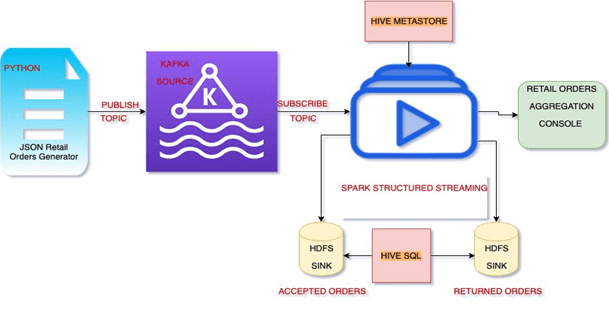
This project will generate dynamic mock data based on the schema at a real-time, which can be further used for Real-time Processing systems like Apache Storm or Spark Streaming.
- Python
The purpose of the project is to subscribe to KAFKA topic from spark structured streaming read stream API and the JSON records are generated automatically using the python retail data generator script. We use HDFS sink of CSV format to write the accepted orders and rejected orders to different location in HDFS and the aggregation of orders like average amount and the count of order Quantity is written to the console. The hive tables orders and orders reject is used to query the accepted and rejected retails orders.
- Java
- Kafka
- Apache Spark
- Hadoop
- Hive
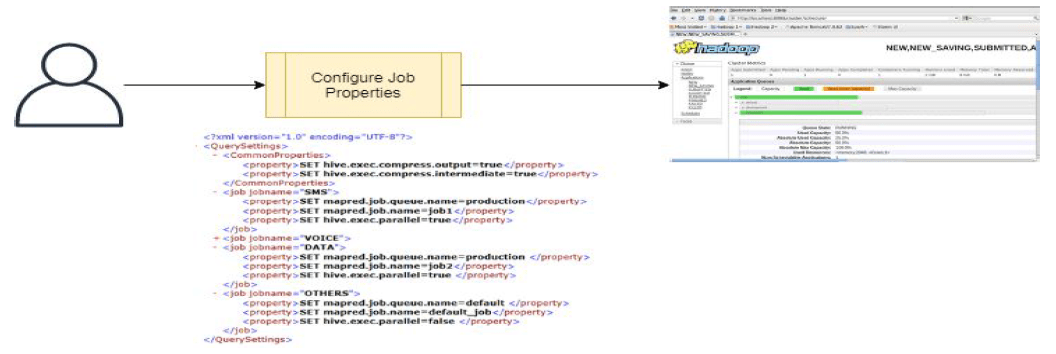
The purpose of this project is to dynamically allocate resources for a Hive job at run time. The job details are present in a XML file read during execution. Based on the job name present in the XML file, the business logic lookup a XML file with the matching job name and assign dynamically the hive job a Queue in capacity scheduler , set multiple resource values and start running the job and the job execution status is visible in Hadoop resource manager Web UI.
- Java
- Hadoop
- Hive
Upcoming Batches
- Online Training
- Procedure For Registration
- Classroom Training
Mar 20th
Duration: 4 Months
₹ 30,000
Apr 17th
Duration: 4 Months
₹ 30,000
1. You have to transfer Rs.1000 towards the registration amount to the below mentioned account details
2. Send screen shot of the payment to info@www.npntraining.com with subject as “Big Data Data Masters Program Pre Registration
3. Once we receive payment , we will be acknowledging the payment through our official email id..
Account Details
| Name: | Naveen P.N |
| Bank Name | State Bank Of India |
| Account No | 64214275988 |
| Account Type | Current Account |
| IFSC Code | SBIN0040938 |
| Bank Branch | Ramanjaneya Nagar |
Send screen shot to : info@www.npntraining.com
Email Subject: Azure Data Engineering Pre Registration
Registration Fees: Rs.1000
Note : Check for the batch availability with Naveen sir before doing the pre-registration.
Sorry Due to Covid situation we are not offering classroom training at present.
Register for Free Demo Class
Experience the Quality of Training
- You can sit in actual class and experience the quality of training.
- Interact with our previous alumini and get the feedback about the course.
- Dont just learn fundamentals go deepen to gain experience.
- Do explore our most comprehensive program in Big Data Engineering.
Frequently Asked Questions
Big Data Architect Learning track has been curated after thorough research and recommendations from industry experts. It will help you differentiate yourself with multi-platform fluency, and have real-world experience with the most important tools and platforms.
- SQL
- Python Programming
All the Big Data classes will be driven by Naveen sir who is a working professional with more than 12 years of experience in IT as well as teaching.
Yes, You can sit in actual live class and experience the quality of training.
The practical experience here at NPN Training will be worth and different than that of other training Institutes in Bangalore. Practical knowledge of Big Data can be experienced through our virtual software of Big Data get installed in your machine.
The detailed installation guides is provided in the E-Learning for setting up the environment.
NPN Training will provide students with all the course material in hard copies. However, students should carry their individual laptops for the program. Please find the minimum configuration required:
Windows 7 / Mac OS
8 GB RAM is highly preferred
100 GB HDD
64 bit OS
The course validity will be one year so that you can attend the missed session in another batches.
Once you have registered and paid for the course, you will have 24/7 access to the E-Learning content.
The total fees you will be paying in 2 installments
Yes, we have group discount options for our training programs. Contact us using the Live Chat link. Our customer service representatives will give you more details.
Certificate of Completion
Earn your certificate
Differentiate yourself
videos, quizzes, hands-on assessments and case studies
gives you a competitive edge.
Share your achievement
your friends and colleagues about it.
Your learning is important. It’s a good idea to go through reviews of previous students to make an informed decision
Posted on Sankara Narayanan Venkateswaran13. December, 2021.Trustindex verifies that the original source of the review is Google. I did big data master program Well knowledged teacher answer to the question structured course highly practical training individual care follow up on every one .Naveen is living example for all I said when you finish other course u will have thorough knowledge only one thing need from us is interest and follow what he is saying good course and great masterPosted on Arpita Paul12. December, 2021.Trustindex verifies that the original source of the review is Google. I joined NPN Training back in July 2021 for Big data Engineer training. Naveen has been the best technical trainer I have come across in my entire career. He teaches topics from scratch, covers every problem hands on and doesn't rest until any issue encountered is resolved. He also provides interview related guidance which is a huge boost for people who are not working directly in big data. Highly recommended for people who are looking to switch to big data but don't have the correct guidance to follow.Posted on Jimesh Rajput21. November, 2021.Trustindex verifies that the original source of the review is Google. Posted on Jack Goody21. November, 2021.Trustindex verifies that the original source of the review is Google. Posted on Chinal Verma21. November, 2021.Trustindex verifies that the original source of the review is Google. Posted on Santosh Rathi21. November, 2021.Trustindex verifies that the original source of the review is Google. Posted on Surbhi Tiwari20. November, 2021.Trustindex verifies that the original source of the review is Google. Posted on Manav Ojha20. November, 2021.Trustindex verifies that the original source of the review is Google. Posted on Arpit Sethi19. November, 2021.Trustindex verifies that the original source of the review is Google. Posted on Rishabh Sha19. November, 2021.Trustindex verifies that the original source of the review is Google. Load more
Popular Courses
Big Data Architect Masters Program
- 100 Hours Of Training
- 4 Months
Full Stack Test Automation Program
- 100 Hours Of Training
- 4 Months
AI with Machine Learning & Deep Learning
- 100 Hours Of Training
- 4 Months